Common Causes Of Well Pump Failure And Practical Troubleshooting Tips
Table of Contents
- Signs of Well Pump Failure
- What Causes Well Pumps to Stop Working?
- How To Troubleshoot Common Well Pump Issues
- Essential Tools for Well Pump Maintenance
- Steps for Basic Well Pump Repairs
- When To Call a Professional
- Best Practices for Preventing Future Problems
- Conclusion
Signs of Well Pump Failure
Reliable water pressure is important for everyday needs like taking a shower, washing dishes, and caring for your garden. If your water drips slowly or sputters you may have a well pump issue. It’s best to notice the early warning signs of well pump repair to avoid a bigger issue later. Some common warning signs of a pump issue are an unexpected drop in water pressure, unusual noises or sounds like rattling, grinding, humming coming from the well pump, or inconsistent water flow. You might also notice your faucets dispense cloudy water, or water that smells or tastes wrong letting you know there’s a problem in the water system. Also, if your electric bill unexpectedly increases there could be an issue with your water pump over working, or malfunctioning. When you notice these signs it’s time to react quickly about your water quality and the integrity of your water system.
What Causes Well Pumps to Stop Working?
There are many things that can cause a well pump to fail. Unfortunately, many of them develop silently over months and years. One of the biggest reasons is mechanical fatigue: a well pump has numerous moving part and as they run over time (like your car), they wear out. Pumps that run too often as a result of leaks, or a faulty pressure switch, experience mechanical fatigue in addition to extra wear as a result of too much cycling or fluctuating pressure on the motor or bearings. Another major reason that pumps fail is power surges or electrical issues. Power surges burn out pump motors and damage pump control boxes. Other environmental causes, like groundwater recession from drought conditions or overdraw from excessive water usage (or possibly nearby construction) can lead to a well running dry, which will only wear pumps out quicker or spell catastrophe. Your pressure tank is also part of the total picture. The bladder in a pressure tank can also fail, which can cause rapid pump cycles on and off. Usually a sediment build up and/or clogged screens or filters will also cause the pump to work harder and eventually wear out the parts. And when things in the environment change around your well system, like nearby construction or greater usage from neighbors or changes to aquifers, your well performance could change too with the potential for you to experience sudden well failure and no water supply! You can learn more about how groundwater levels fluctuate over time and affect your well.
How To Troubleshoot Common Well Pump Issues
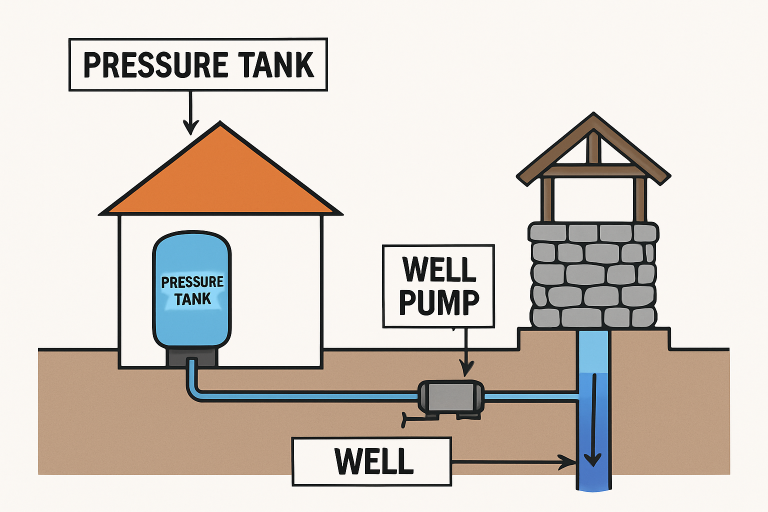
Many homeowners often discover that they can take a few basic steps to diagnose a well pump concern; before calling a professional, consider looking for a few warnings. First, examine the power source: be sure the power sources and circuit breakers are functioning and reset. Second, examine the gauge located on the pressure of a pressure tank; most systems typically have readings showing a normal reading range from 40 to 60 psi. If this reading is low or fluctuating in reading, this is likely a sign of an issue with the pressure tank or water pressure switch. If the pump will not start, or if the pump cycles too much, this may indicate a problem with the pressure switch or relay. Third, listen carefully for any new or unusual noises coming from the pump system, as noises can be a symptom of more serious internal defects, or unusual obstructions. Fourth, examine what is visible of the pipes, and pump housing for leaks, corrosion, or any other damage. Fifth, for cloudy or dirty water incidences, be sure to check that sediment filters or well screens do not need to be cleaned/changed. Lastly, regular examinations of this nature can help to eliminate any surprises with equipment failure thus helping individuals to better understand their basic sound equipment they have.
Essential Tools for Well Pump Maintenance
- Multimeter: To test electrical continuity and diagnose circuit and switch voltage issues.
- Pipe wrenches: Essential for tightening or loosening pipe connections and fittings.
- Pressure gauge: Ensures accurate water pressure readings within the system.
- Flashlight: Helps with inspection in dark or difficult-to-access areas of the pump setup.
- Teflon tape: Necessary for creating leak-proof threaded connections on pipes and fittings.
Equipping yourself with these tools allows for safer, more effective at-home checks and repairs, ultimately supporting proactive maintenance habits.
Steps for Basic Well Pump Repairs
- Always begin by turning off the power at the breaker panel to avoid electrical hazards.
- Inspect the pressure switch; reset it if the pump fails to turn on, and ensure contacts are clean and debris-free.
- Check for tripped circuit breakers or blown fuses—replace damaged components and restore power to test results.
- Examine all visible pipes, valves, and fittings for leaks, tightening connections with a pipe wrench where necessary.
- If water quality declines, remove and clean or replace well screens and inline sediment filters.
Take care during these repairs. If you feel uncertain or encounter anything more complex—such as wiring problems or deep well issues—it is essential to seek professional help.
When To Call a Professional
Homeowners can troubleshoot and repair minor issues concerning well pumps, but there are some well problems that require a well contractor license. If a submersible pump fails, dealing with defective electrical wiring, or complex plumbing systems can expose you to safety risks that require experience and special equipment. Homeowners in trouble with deep wells or persistent issues with repairs; beyond basic repairs, can expose you to serious potential problems. It’s more advisable to proceed with an experienced professional to ensure correct diagnostics and services are done safely. If your well pump stops working, fails to restart, or has continuing electrical issues, do not take apart pump components on your own, you should schedule a well pump inspection and repair service with a professional well contractor.
Best Practices for Preventing Future Problems
Establish a schedule for an annual well and pump inspection by a qualified technician, which will help identify any developing issues.
A well maintained well allows for extra peace of mind in regards to water quality and safe operation. It certainly makes sense to keep the area clear of debris, chemicals, bugs, etc to reduce contamination risks and promote safe and effective operation. A little common sense and observing how your well operates is important. Check your water pressure and quality regularly. Be aware of taste, clarity and any other changing factors, plus report them. Listen for unusual noises, leaks or warning lights on your system and be sure to act quickly to the abnormality. Don’t allow small issues to grow into potentially large breakdowns. By keeping to a preventative maintenance schedule, you reduce the potential of surprise failures along with increasing the life expectancy of the entire sound system asset. It can amount to significant savings over time!
Conclusion
Taking care of a well pump might sound intimidating, but armed with the right information/tools, homeowners can detect early warning signs, diagnose minor problems and carry out simple repairs before they become serious, and maintain peace of mind. Regular inspections and maintenance (cleaning the filters, monitoring changes in water pressure) not only enable you to enjoy a more dependable source of water, but also, prevent major emergency repairs that require expensive emergency services. Being able to identify a questionably operating well pump is important; knowing when it’s not safe or practical to try and do any more than address whatever simple problems you are capable of is also important— because some problems require specific skill-sets to ensure your water system is operating safely and effectively. Well pumps do last a long time and with a good approach to your maintenance practices and utilizing help when needed, your well pump should last a long time, provide assurance your water supply is of acceptable quality, enjoy dependable access to water for years and years without interruption!
- How To Compare Puerto Rico Neighborhoods Before Buying A Home In 2026
- Comprehensive Guide to Purchasing a Home in Highland Park, Texas
- Living and Buying in Longboat Key: Your Guide to Paradise on Florida’s Gulf Coast
- Embarking on Homeownership in Washington, D.C.: A Comprehensive Guide
- Seeing Is Believing: How to Spot Potential in Any Home